
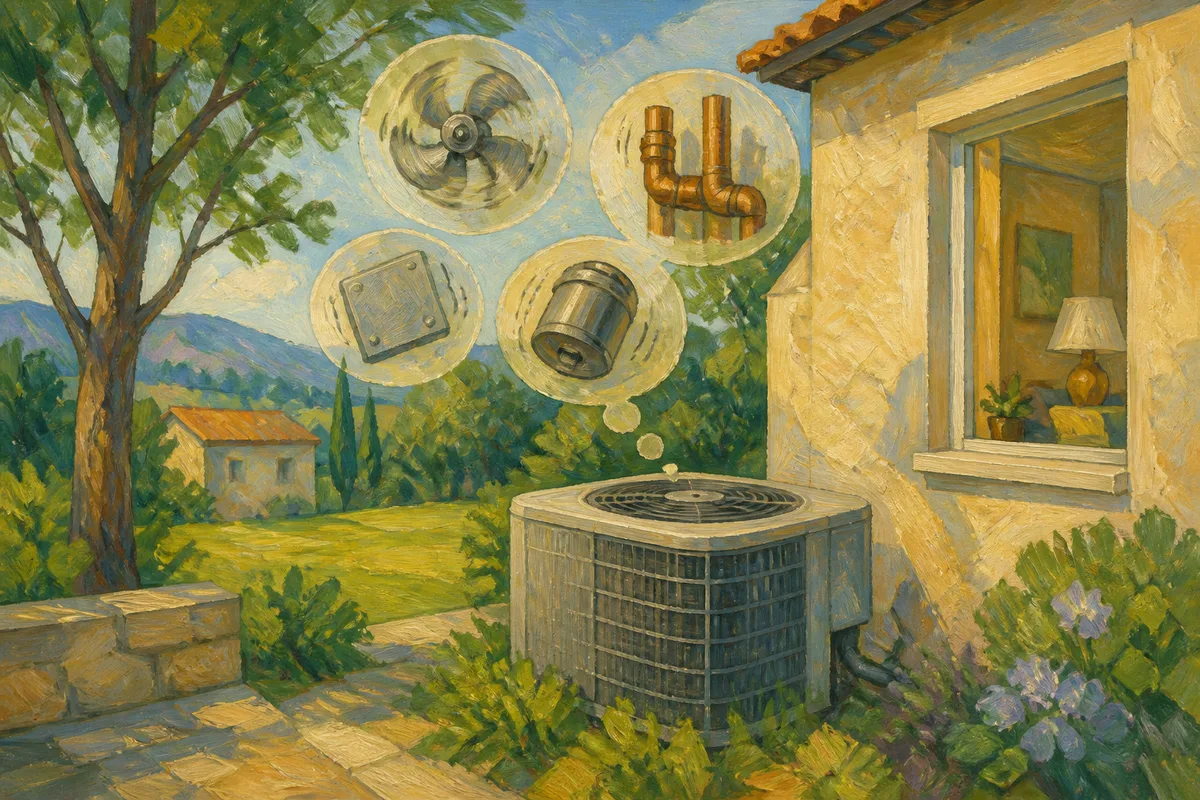
What That Rattle, Hum, or Bang From Your System Might Mean
Your heating and cooling system talks to you more than you might think. Most of the time it hums along quietly in the background, doing its job without much notice. But when a new sound shows up, whether it is a rattle, a hum that seems louder than usual, or a sudden bang, that is your system's way of flagging a change worth paying attention to.
Not every noise means trouble is around the corner, and not every noise means you should panic. Some sounds are simple fixes, while others are early warnings of something that could grow into a bigger repair if left alone. This guide will help you get a general sense of what different sounds might mean and how quickly you should act on them.
Rattles and Buzzes
A light rattle or buzz is one of the more common sounds homeowners notice, especially from an outdoor unit or ductwork. Often, this comes from something fairly minor, like a loose panel, a screw that has worked itself free, or small debris such as leaves or twigs that have found their way into the outdoor unit.
Loose ductwork can also cause a rattling sound as air moves through the system, especially in older homes or after a recent repair. While this type of noise usually is not an emergency, it is worth having someone take a look. Left unchecked, a loose part can shift out of place and cause more wear on nearby components over time.
If you notice a buzzing sound instead of a rattle, it could point to an electrical connection that needs attention. Since electrical issues can escalate quickly, this is one you should not ignore for too long.
Humming or Vibrating Sounds
A soft, steady hum is normal for most heating and cooling equipment. It is simply the sound of motors and fans doing their job. But if the hum grows louder, changes in tone, or comes with noticeable vibration, that is a different story.
Louder humming can sometimes point to a motor that is working harder than it should, a part that has come loose and is vibrating against the frame, or an electrical component that is starting to wear out. These issues are usually not urgent enough to require an emergency call, but they are worth scheduling a visit for sooner rather than later so a technician can pinpoint the cause before it leads to a bigger repair.
Banging, Clanking, or Popping
This category of sound tends to get people's attention the fastest, and for good reason. A bang or clank often means something inside the system has come loose, shifted out of place, or broken. In furnaces, a popping sound during startup can sometimes relate to the ignition process, while a bang from the blower area might mean a part has detached and is hitting other components.
If you hear a sudden, sharp bang, it is a good idea to turn the system off and give us a call rather than waiting to see if it happens again. Continuing to run a system that is making these kinds of sounds can sometimes turn a smaller issue into a more involved repair.
Metal ductwork expanding and contracting with temperature changes can also cause occasional popping sounds, and this is usually harmless. The difference is that expansion noises tend to be brief and happen mainly when the system starts up or shuts off, rather than continuing throughout a cycle.
Squealing or Screeching
A squeal or screech is one of the sounds that tends to mean a part needs attention soon. In many systems, this points to a belt that has worn or slipped out of position, or a motor bearing that needs lubrication. Over time, this kind of friction can wear down parts faster than they would otherwise, so it is worth having someone take a look before the sound gets worse or the part fails completely.
This type of noise is more common in systems that have been running for several years without recent maintenance, which is one reason regular check-ups can be helpful. Catching a worn belt or dry bearing early on tends to be a simpler fix than waiting until the part stops working altogether.
When It Is Time to Call Someone
Every home and every system is a little different, so these general descriptions will not cover every situation. The tone, timing, and pattern of a sound can tell a trained ear a lot more than a written guide ever could. If you are hearing something new and are not sure whether it can wait or needs attention right away, it is always reasonable to call and describe what you are hearing.
For sounds that show up suddenly, get louder quickly, or come with other changes like a burning smell, reduced airflow, or the system shutting off on its own, it is best not to wait. Our team offers 24/7 emergency HVAC repairs for situations like this, and regular maintenance visits can help catch small issues, like a loose panel or worn belt, before they turn into something that keeps you up at night.
If your system in the Boise area has started making a sound you cannot quite place, feel free to give Western Heating & Air Conditioning a call. We are happy to talk through what you are hearing and help you figure out the next step.
Questions about your own situation? The team at Western Heating & Air Conditioning is happy to help — call us at (208) 319-1736 or request an appointment.
This article is for general information only.